Friday, August 26, 2016

Coffee Yoga

Mug


I've been doing yoga off and on for most of my adult life. I started for the strength and flexibility of body, but it called to me as a practice of spirituality too since it's a moving meditation. Given my commitment to it, I wondered why some mornings when I got up, it seemed more like a chore than a joy.

So I decided to see if, or how, I could change that.

Of course I know that I'm not as young as I used to be, not as flexible. It'd be crazy for me to compare myself to an earlier me. But sometimes a bit sneaks in. Certainly I understand that there are times when it's just too hard to get to the mat. I'm not shirking. Yet sometimes I wonder if I'm being a bit lazy. The biggest drawback though, was discouragement. I was doing so well, strengthening my shoulders and then, a setback - my physiotherapist told me, "No more plank. Ever." I know I can adjust. I have in the past, but, well, damn.

Then I came across this passage in "Awakening the Spine," by Vanda Scaravelli.

She asked, "Why are we doing yoga? For health reasons? ... Out of a sense of duty or discipline? ... No. Nothing of the kind. No motivation, no aims, only an agreeable appointment for the body to look forward to. We do it for the fun of it. To twist, stretch, and move around is pleasant and enjoyable, a body holiday."

An agreeable appointment. A body holiday. For the fun of it.

It was just what I needed to see.

Life is good, I reminded myself. There is no need to struggle. Ease in the physical = ease in the spiritual.

That's where the coffee came in.

But isn't coffee bad for you? Yeah, well so is discouragement. And I take joy in my morning coffee.

So I dig out the yoga mat first thing in the morning right after I make the coffee, and I do a routine (or part of one) with a video. When I come to a spot that I can't do any more, I see what I can substitute that brings ease, or I sit back for 30 seconds and sip from my favourite chick mug, while Adriene or Padma does her thing.

It's been fun. Joy isn't found in what I used to be able to do, or what I might be able to achieve in the future. It's found right now on the yoga mat. And today, it's with a cup of coffee.


First published in September 2016 in my free monthly email newsletter, Starry Night. Sign up here.

Right or Wrong

BBQ


In her email to my group, the writer said, "I feel I need to correct a misperception. Just because it is cooked on a grill, it does not make it barbeque. To cook something on an open flame over direct heat is to grill. To barbeque is to cook something slowly over indirect heat, flavoring the food with smoke." At first, I wondered if she was joking, but no, she's a Certified Barbeque Judge from the southern USA.

What makes us need to correct other people when we believe they're wrong?

Sarah, who is gay, corrects people to 'educate' them. Her barely suppressed anger covers her hurt feelings, her vulnerability, and her need for acceptance.

Harry corrects people to bolster his self-esteem. He may even think it's his ideas we must agree with, but he just wants his beliefs and ideas to count for something.

After Sharon insisted that the documents we needed for the lawyer were in my possession, and I knew they were in hers, our conflict was about more than simply who was right, it was about how we perceived ourselves, each of us seeing ourselves as well-organized and efficient.

We need to be right to maintain our grip onto self-identity, personal or cultural. The barbeque lady is a good example of cultural identity. That's how things are done in the 'south'.

The I'm-right, No-I'm-right, kind of conflict doesn't produce any winners, though.

After I got off the phone with Sharon, I rushed to my notes to see who was right about the documents. I was. Yes! That felt gratifying, but only for a second. My conviction that I was right ran deep. But she was just as convinced that she was right. My ego may have been gratified by being right, but at what cost to hers?

Being right didn't make me happy.

After that, I changed my mantra to "Do I want to be right or happy?"

It was a good next step. It made room for me to choose not to get caught up in an unnecessary conflict. Yet, it didn't go far enough. If I smiled graciously and let them 'continue to deceive themselves,' my need to be right meant I was still caught up in ego gratification.

Too often we mix facts and beliefs, forgetting that just as beliefs can and do change over time, facts can too. Galileo. Need I say more?

And each of us from our own unique perspective, conditioning and experience is bound to see things differently from others. Someone who is colour-blind will not see yellow the same way I do. There's a good chance nobody sees yellow quite the same as I do, even though the variations may be small.

So what can I do when beliefs conflict?

It helps to eliminate all ideas of right or wrong: Right or wrong? There's no such thing. Whatever the belief they have, it's theirs. They came to this belief through a lot of living. They earned every bit of their belief. It's as true to them as my beliefs are to me.

Recognize that their beliefs are not my responsibility: These beliefs could all change at some point, but someone else's beliefs are not really my business unless actions taken as a result of these beliefs do me harm. I don't have any responsibility to find consensus. I don't have to mediate, educate, or persuade anyone. I don't need resolution.

Let it be a bit uncomfortable: Lack of resolution can be uncomfortable. Ego doesn't like that. And ego likes to be right.

Choose how much I want to become embroiled in conflict: If it turns into a conflict, know that I can withdraw at any time. I am entitled. If I long to jump in and persuade, then it's my own ego trying to take control.

Then finally, see us all with tenderness: Sharon was facing the tough fact that she might not have been quite as in control of the paperwork as she thought. Harry was facing the tough fact that he didn't have as much influence on the world around him as he wanted. Sarah was facing the tough fact that not everyone cares about her pain.

My intention now:
  • Find a chair that is easy and comfortable to sit on.
  • Regard her or him with tenderness.
  • Sit and breathe.

Do I want to be right or happy? It doesn't matter. By getting ego out of the picture, right and wrong dissolve into the flow of life.


A link to an XKCD toon about being right.

Thursday, August 25, 2016

Conditioning

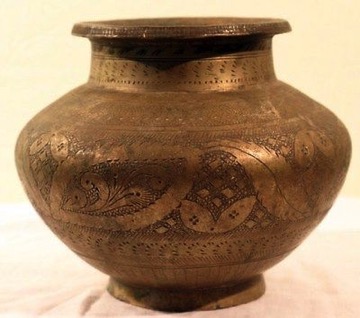
water pot


When I walk, my body starts to walk itself after I have gone a certain distance. For the first ten minutes or so, I can feel the effort in the movement, but then, it just opens up and the effort is gone. My body seems to think, “Oh, THIS is what you want to do !” and does it for me. The body itself seems to develop a memory.

The trick is to make all this work for us rather than against us.

Think not lightly of good, saying,
'It will not come to me.'
Drop by drop is the water pot filled.
Likewise, the wise man,
gathering it little by little,
fills himself with good.
 — Dhammapada 122 –


First published August 2008 in my free monthly email newsletter, Starry Night. Sign up here.
Friday, August 19, 2016

Expectation

Light shadow wall360

When "we go out with an idea, we close the doors of possibility. When we expect a certain result, only two things can happen: We will either find what we are looking for or we won't. Either way, we are blind to all other possibilities because we are focused on our expectation. ... Open yourself to discovery. Enjoy the mystery. All the good stuff is hidden in the dark corners. It's what gives life its sense of vitality."

- John Daido Loori Roshi

Wednesday, August 17, 2016

I Wish You Peace

Tulip


When I drove by the place where that guy lives - the politician who called me a liar, I realized I still wasn't over it. But didn't want to spend energy on the issue or him. I wanted to let it go in a healthy way. So I said aloud, "I still have issues with you, but I wish you peace." My energy settled right down.

When I had an argument with a family member I thought, "I don't know how to make this better, but I wish you peace."

When I saw a TV personality make an ass out of himself and his great country, I said "I don't like your worldview, but I wish you peace."

The wish for peace must be genuine. None of that fake-it-til-you-make-it stuff. If I can't dredge up an ounce of genuine tenderness towards them, then all it does is keep the discord alive.

Wishing someone peace may not resolve the problem, but the weight of authentic compassion, love, kindness goes deeper and reaches farther than any issue I may have with them. And it helps me let it go.

Tuesday, August 9, 2016

What is True?

Handsmichellelynnegoodfellow

Kathy popped up on the radar the other day. We parted ways a decade ago – no hard feelings. But what made us part was a difference in beliefs. I felt some of her notions were pretty “way out there”. Yet, I realized that even though her beliefs didn’t match mine, she believes them thoroughly and lives her life according to those deeply held principles.

I’ve had some important men in my life who have believed deeply in the power of reason or intellect to handle life well. They’ve lived good lives according to those values. At the same time, they saw my belief in the power of prayer as “way out there” too.

A strong difference in beliefs can break apart families and friendships. Getting people to believe the same thing is a recipe for war.

Yet it’s understandable why we would want to swing someone else around to our way of thinking. Consensus builds trust. We can act as a group when we are all operating from the same beliefs – or assumptions. And when we have a conversion to a new set of beliefs, we want others to know just how wonderful this new truth is. It may seem so joyful and promising that it can be hard to grasp that others might not be interested. We build our lives around this new information. And we don’t stop talking about it until it is a belief that is firmly entrenched in our minds.

We perceive this as truth, and not a belief. We don’t look farther ahead and see that this truth, while it could be valid for us for years, may itself change when something new nudges it aside.

Truth isn’t really a be-all and end-all thing. It’s flexible. What we believe now may be worlds apart from what we believed to be true a decade ago – or even last week. Truths that we adopt in life can be fleeting or superficial. We change.

Ultimate truth seems to go much deeper than religious ideas, myths, or scientific principle. Yet in our human way, we have assigned ‘truth’ a meaning of being whatever we believe about reality in any given moment. Since, as human beings, we are incapable of grasping the whole of reality, if truth is about being in accord with reality, we’re really all just making good guesses.

That’s why it’s important to find ways of connecting with those around us. Each of us holds a different set of beliefs about reality. To each of us, ‘truth’ means something different than to anyone else.

In the end, it might not matter what we believe is true, and it might not matter if we share beliefs with the people around us. It matters how we live. Kathy’s deeply held truths are just as important to her – and just as valid as mine are to me. I don’t want to let something as speculative as the truth stand in the way of love.


Revised slightly from story first published November 2011 in my free monthly email newsletter, Starry Night. Sign up here.